
Why Accessibility Is Difficult to Test
Why Accessibility Is Difficult to Test Thoroughly
Website accessibility is often discussed in terms of standards and compliance, which can create the impression that it is something that can be fully tested and verified in a straightforward way.
In reality, accessibility testing is complex, multi-layered, and not easily reduced to a simple “pass or fail” result.
No Single Tool Can Test Everything
A common misconception is that accessibility can be verified using a single automated tool or scan.
While automated tools can be helpful for identifying certain types of issues, they typically detect only a portion of potential accessibility barriers.
Automated tools are generally able to flag:
- Missing alternative text
- Basic structural issues
- Some color contrast concerns
- Certain form-related problems
However, many accessibility considerations require human judgment and cannot be fully evaluated through automation alone.
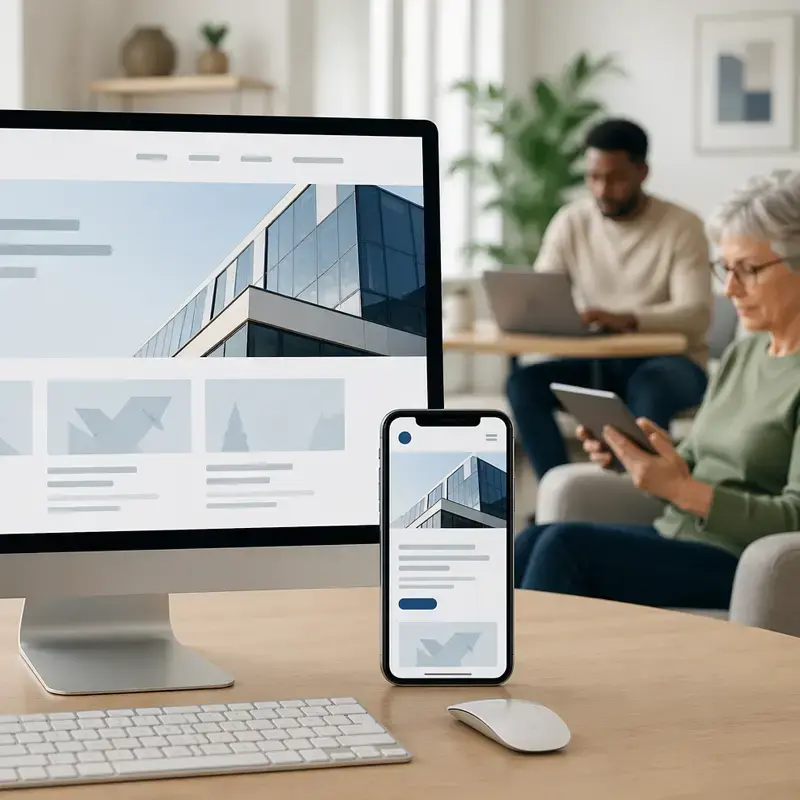
Manual Testing Is Often Required
A more complete evaluation of accessibility often involves manual review, which may include:
- Navigating a website using only a keyboard
- Reviewing content structure and readability
- Testing interactive elements such as menus, forms, and modals
- Identifying areas where user experience may break down
Manual testing helps identify issues that automated tools cannot detect, particularly those related to usability and interaction.
Assistive Technology Adds Another Layer
Accessibility is also affected by how websites interact with assistive technologies such as:
- Screen readers
- Screen magnification tools
- Voice navigation systems
Different assistive technologies may interpret the same content in different ways. As a result, testing across multiple tools and environments may be necessary to understand how a website performs for different users.
Variations Across Devices and Browsers
Accessibility is not experienced in a single, controlled environment.It can vary based on:
- The device being used (desktop, tablet, mobile)
- The browser or operating system
- User settings and preferences
A website that works well in one context may behave differently in another, adding to the complexity of testing.
Content Changes Over Time
Accessibility is not static. Even after a website has been reviewed or improved, changes to content can introduce new issues.
Examples include:
- Adding images without alternative text
- Uploading inaccessible documents
- Modifying page layouts or navigation
- Embedding new third-party tools
Because websites evolve over time, accessibility testing is not a one-time activity.
Interpretation and Judgment
Even when using established guidelines such as the Web Content Accessibility Guidelines, there can be elements of interpretation involved.
Some accessibility criteria are technical and measurable, while others require judgment about usability and user experience.
This can lead to differences in how accessibility is evaluated across tools, reviewers, and organizations.
No Universal “Pass or Fail”
Because of all these factors, accessibility is not always a simple matter of passing or failing a test.
Instead, it is often approached as:
- A process of identifying and addressing issues
- An effort to improve usability over time
- A combination of technical checks and human evaluation
This perspective helps explain why different tools or reviewers may produce different results for the same website.
A Practical Perspective
Understanding the limitations of accessibility testing can help set realistic expectations.
While it is possible to identify and improve many accessibility issues, fully validating accessibility across all scenarios may require:
- Multiple testing methods
- Specialized tools
- Ongoing review and maintenance
For organizations that require a higher level of assurance, accessibility audits performed by specialists are often part of the process.
Important Note
This page provides general information about accessibility testing. It is not an accessibility audit, certification, or guarantee of compliance.