
Plain English Summary
Accessibility in Plain English
Website accessibility can feel complicated. There are laws, technical standards, testing methods, and a lot of terminology that may not be familiar to most business owners.
This page is a simple, practical explanation of what accessibility means and how it typically applies to a website.
What Is Website Accessibility?
Website accessibility refers to how easily people can use your website, including individuals who may:
- Have limited vision or be blind
- Have difficulty using a mouse or keyboard
- Rely on assistive technologies such as screen readers
- Need clear structure and readable content
An accessible website is one that reduces barriers and allows more people to access information and complete tasks.
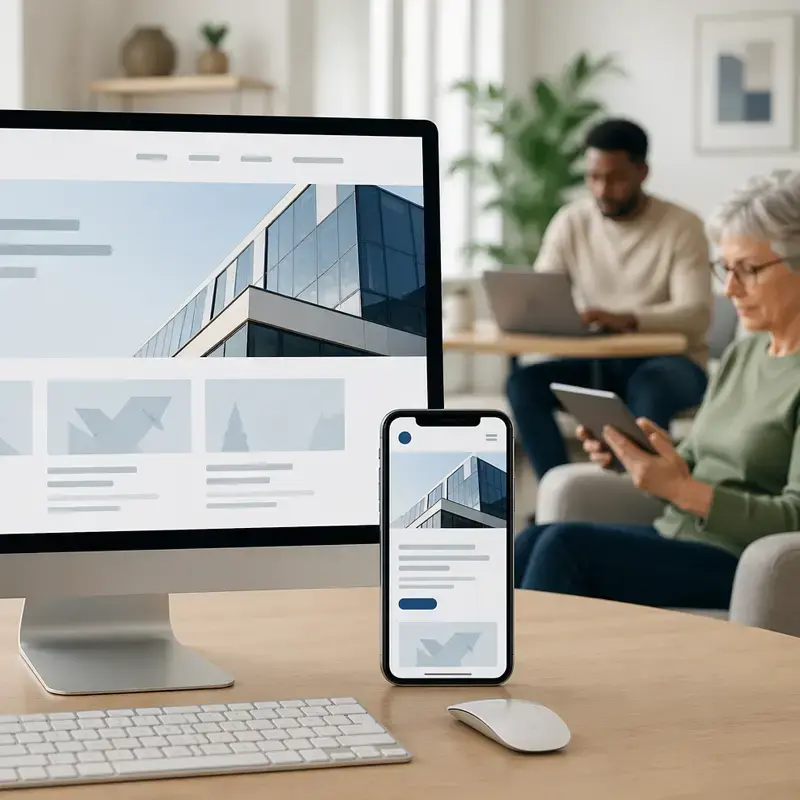
Why Accessibility Matters
Accessibility is important for several reasons:
- It improves usability for a broader range of users
- It helps ensure that services and information are available to the public
- It reflects a more inclusive approach to communication
Accessibility is also being discussed more frequently in legal and regulatory contexts, which has increased awareness among organizations.
What Makes Accessibility Challenging
Accessibility is not always straightforward.
Some of the reasons include:
- There is no single checklist that guarantees accessibility in every situation
- Different users interact with websites in different ways
- Assistive technologies may interpret content differently
- Websites change over time as content is updated
Because of this, accessibility is usually approached as an ongoing process rather than something that can be completed once.
What a Website Project Can and Cannot Do
A website can be designed and built using accessibility-aware practices, such as:
- Structuring content clearly
- Supporting keyboard navigation
- Allowing for alternative text on images
- Paying attention to contrast and readability
However, a standard website project does not typically include:
- Formal accessibility audits
- Assistive technology testing
- Legal certification of compliance
Accessibility often extends beyond the initial build of the website.
Why Accessibility Can Change Over Time
Even after a website is launched, accessibility can be affected by:
- New content added to the site
- Uploaded documents or media
- Changes to design or layout
- Third-party tools and integrations
Maintaining accessibility usually requires ongoing attention.
What Organizations Often Do
Organizations typically approach accessibility by:
- Improving obvious issues
- Making content easier to use and understand
- Reviewing important areas of the website
- Seeking additional guidance when needed
Some organizations also choose to work with accessibility specialists for more detailed evaluation.
A Simple Way to Think About It
Accessibility is best understood as:
- An effort to make your website usable by more people
- A process that improves over time
- A combination of design, content, and ongoing maintenance
It is not a one-time fix or a simple pass/fail condition.
A Practical Perspective
Most organizations are not expected to solve every aspect of accessibility all at once.
Instead, accessibility is often addressed gradually, with improvements made over time as awareness increases and priorities evolve.
Important Note
This page provides a general, simplified overview of website accessibility. It is not legal advice, an accessibility audit, or a guarantee of compliance with any specific standard.